
Cracks in Your Foundation: Cosmetic or Structural?
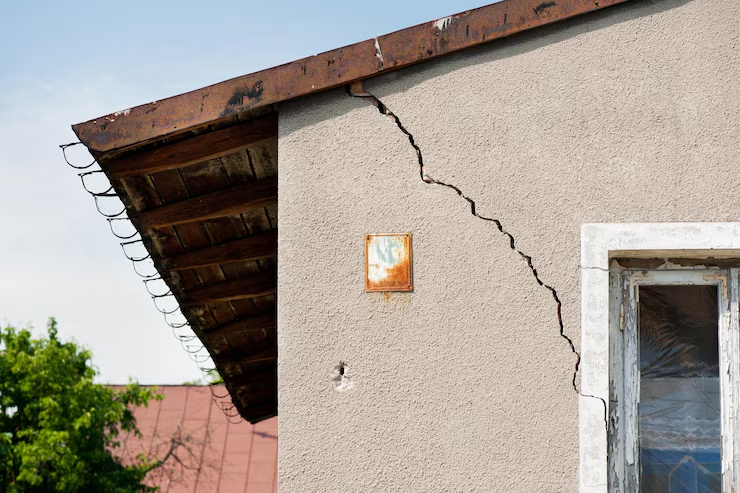
Every homeowner in Dorchester knows that the ground beneath our feet is rarely still. Between the marshy history of certain parts of the neighborhood and the intense freeze-thaw cycles on Gallivan Blvd, foundations take a beating.
When you spot a line running across your basement wall, the first question is always: Is my house falling down, or is this just old age? Distinguishing between a simple fix and a major structural threat is key to protecting your investment. Here is how to tell if you need foundation crack repair or a visit from a structural engineer.
1. Cosmetic Cracks: The “Hairline” Signs of Aging
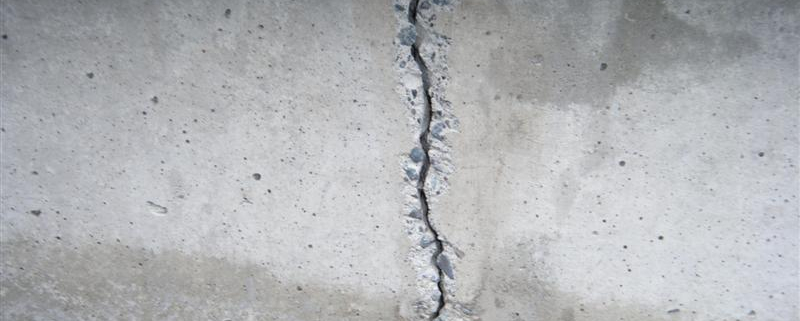
Most homes, especially the historic triples and older builds around 02122, will experience some “settling.” These are usually not a cause for immediate alarm.
- Vertical Cracks: If the crack runs straight up and down (or slightly diagonal), it is often caused by the concrete shrinking as it cures or minor settling foundation movement.
- Hairline Width: If the crack is thinner than 1/8 of an inch (about the thickness of a penny), it is likely cosmetic.
- Location: Small cracks in the corners of door frames or windows are common in Dorchester’s older wood-framed homes.
The Fix: These can usually be monitored or filled with a DIY epoxy kit to prevent moisture from seeping in.
2. Structural Cracks: Red Flags You Can’t Ignore
Structural cracks mean the integrity of your home is being compromised. If you see these in your basement wall cracks, it’s time to call the pros.
Horizontal Cracks
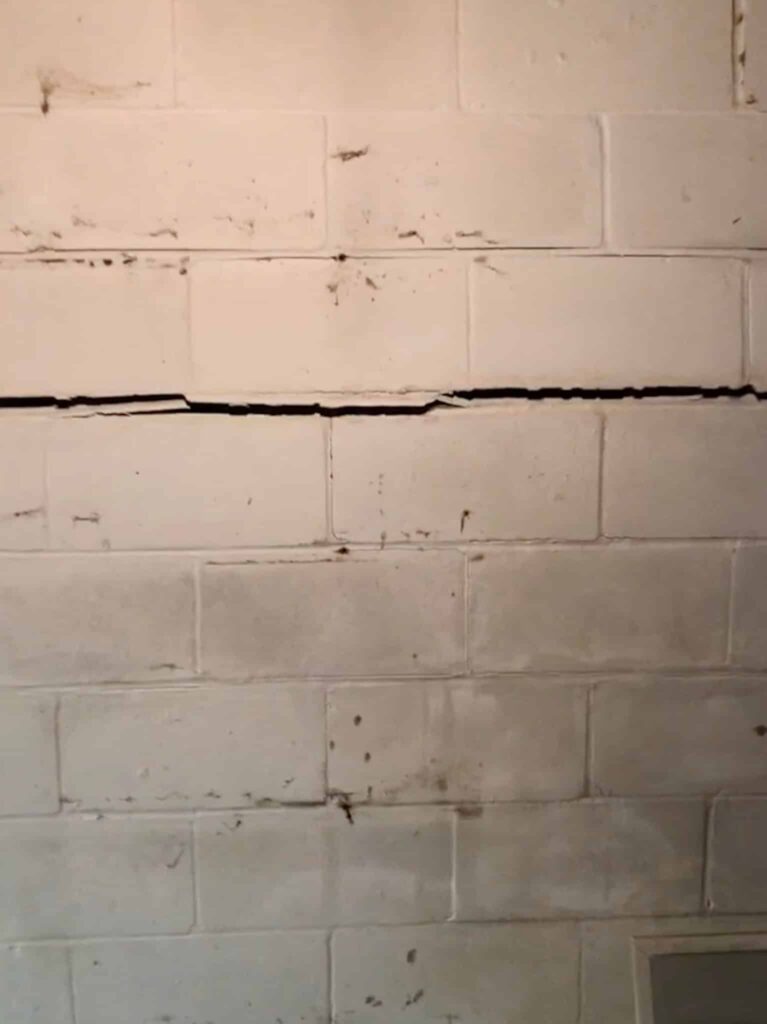
This is the most dangerous type of crack. A horizontal line running across your basement wall usually means hydrostatic pressure (water pressure in the Dorchester soil) is pushing against your foundation. The wall is literally bowing inward and could eventually fail.
Stair-Step Cracks
Common in brick or concrete block foundations, these cracks follow the mortar lines in a zigzag pattern. If the crack is wider than 1/4 inch or if the wall is bulging, it indicates significant foundation settlement.
Wide or “Offset” Cracks
If you can fit your pinky finger into the crack, or if one side of the crack is sticking out further than the other (an “offset”), the foundation has shifted significantly.
| Crack Type | Direction | Risk Level | Recommended Action |
| Shrinkage | Vertical | Low | Monitor/Seal |
| Settling | Stair-step | Moderate | Professional Inspection |
| Pressure | Horizontal | High | Immediate Repair |
3. Beyond the Walls: Other Signs of Foundation Stress
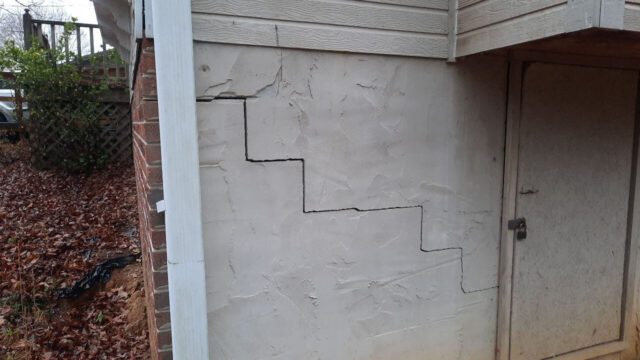
Sometimes the clearest signs of a settling foundation aren’t in the basement at all. Check the rest of your home for these symptoms:
- Sticking Doors and Windows: If you suddenly find yourself “lifting” a door handle to get it to lock, the frame has likely shifted.
- Gaps in Exterior Trim: Look up at your fascia boards or where the siding meets the corner—gaps here indicate the house is pulling apart.
- Sloping Floors: Grab a marble or a ball; if it consistently rolls toward one corner of the room, your floor is no longer level.
4. Why Dorchester Homes are at Risk
The area around 757 Gallivan Blvd faces unique geological challenges. Much of Dorchester was built on “filled” land or sits on clay-heavy soil.
- Water Table: Our proximity to the coast means a high water table, which puts constant pressure on basement walls.
- The Big Freeze: When the ground freezes in January, it expands, “heaving” your foundation upward. When it thaws, the house drops back down, creating those dreaded basement wall cracks.
When to Call a Structural Engineer
If you are buying a home, selling one, or have spotted a horizontal crack, don’t just call a repair company—call an independent structural engineer first. They provide an unbiased report on whether the home is safe, whereas a repair contractor may have a bias toward selling you a specific system.
Pro Tip: In Dorchester, moisture is the enemy. Ensure your gutters are clear and downspouts are discharging water at least 5–10 feet away from your foundation to prevent pressure buildup.
Do you have a crack that’s worrying you?
Catching a foundation issue early can be the difference between a $1,500 injection repair and a $30,000 piering project.
Would you like me to generate some images to help you visualize these different crack types, or would you like a list of questions to ask a foundation contractor?