
Why Is My Basement Wet? (And How to Fix It for Good)
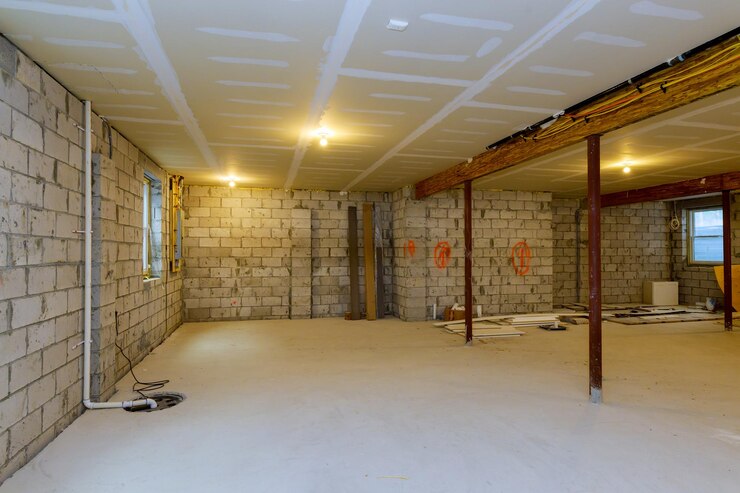
If you live in Dorchester, you know that a rainy week usually means one thing: the frantic sound of a sump pump or the dreaded sight of a puddle forming on your basement floor. Between the proximity to the Neponset River and the dense clay soil around Gallivan Blvd, wet basements aren’t just an annoyance—they are a neighborhood staple.
But a damp basement isn’t something you have to live with. Understanding the “why” behind the water is the first step toward finding permanent wet basement solutions.
Why Dorchester Basements Get Wet
The homes in the 02122 zip code face a unique set of challenges. Most of our basements were built at a time when “waterproofing” meant a prayer and a thick coat of paint.
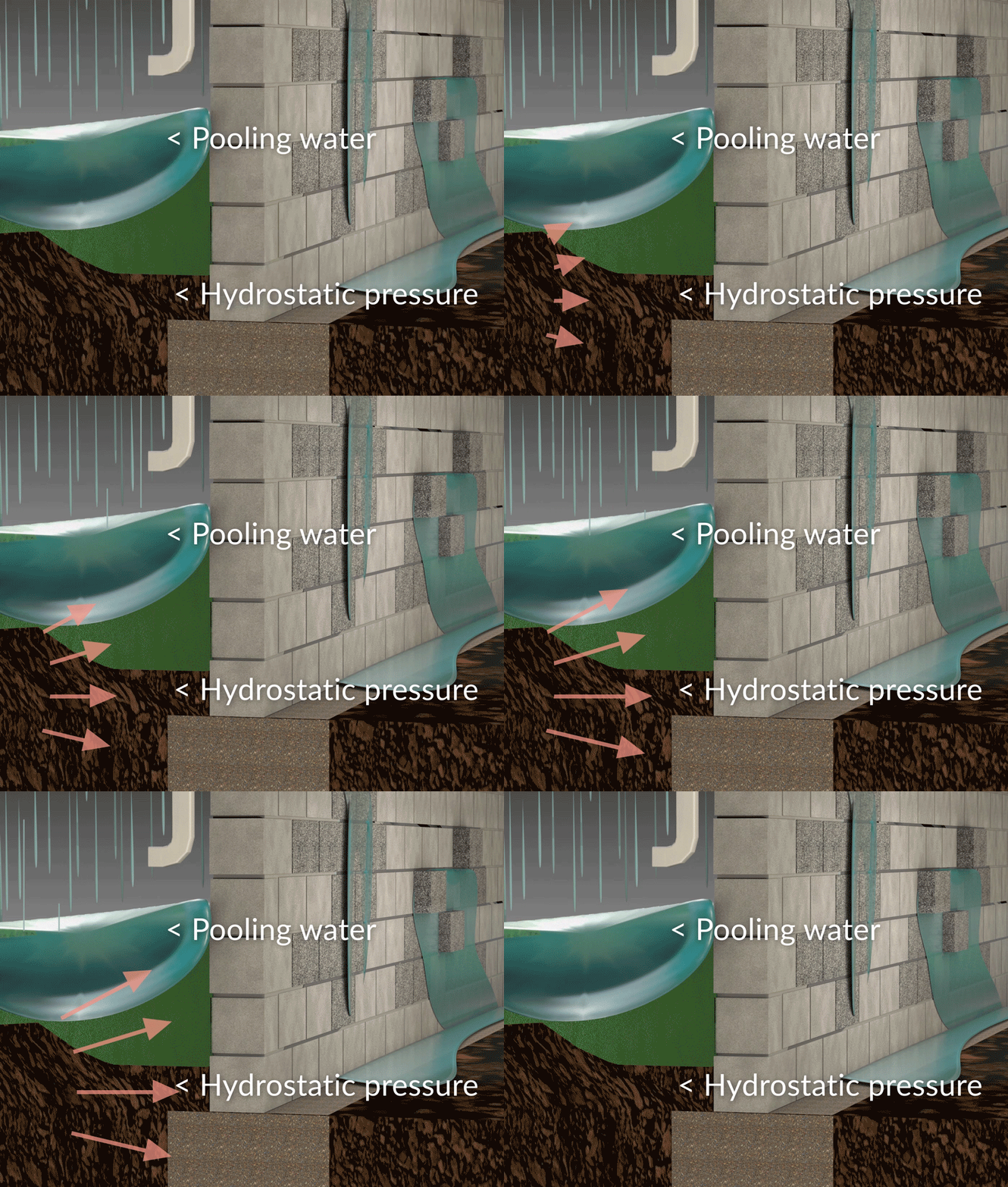
- Hydrostatic Pressure: This is the most common culprit. When it rains heavily in Massachusetts, the soil becomes saturated. This water exerts massive pressure against your foundation, forcing moisture through microscopic pores in the concrete.
- The “Bowl Effect”: If your home was built in a patch of clay-heavy soil, the “backfill” around your foundation acts like a sponge, holding water right against your walls.
- High Water Table: Being near the coast and lower-lying areas of Dorchester means the natural groundwater level is often just inches below your basement floor.
3 Permanent Ways to Dry Out Your Basement
To truly fix a wet basement “for good,” you have to move beyond temporary patches. Here are the professional-grade options most recommended by a waterproofing contractor:
1. Interior French Drain Installation
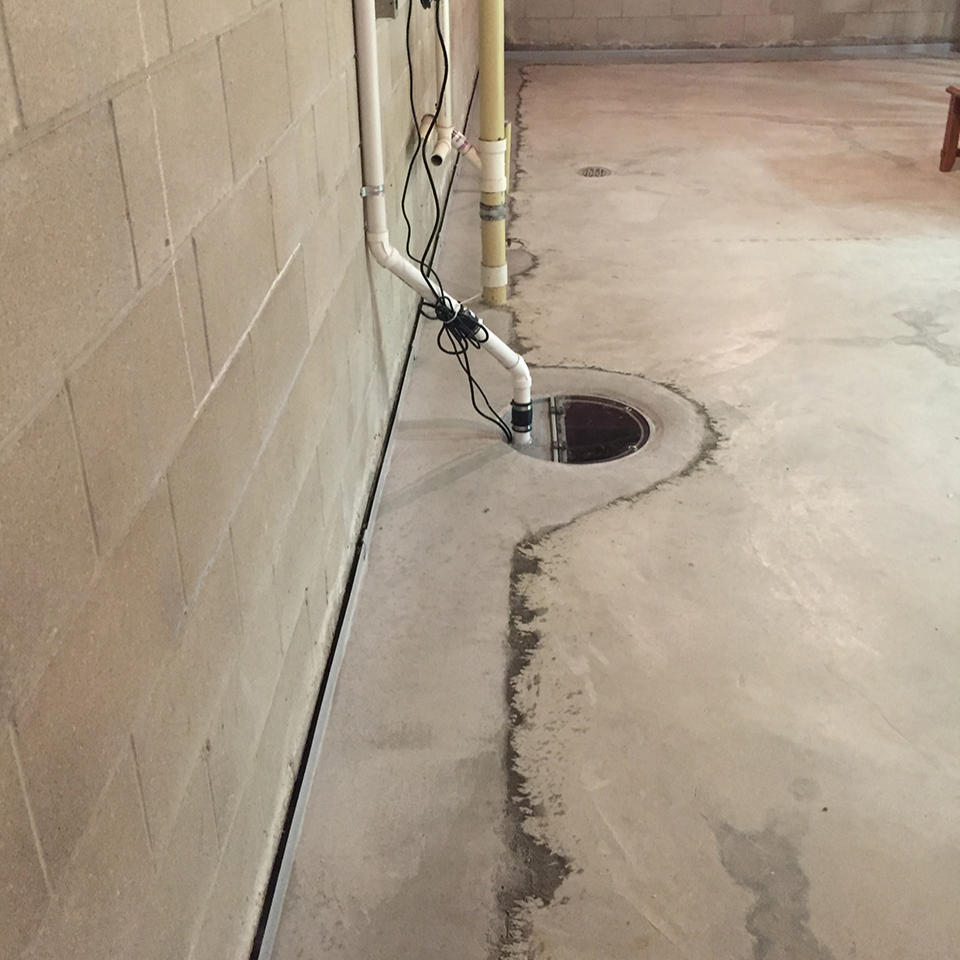
An interior French drain installation is often the gold standard for Dorchester triple-deckers.
- How it works: A trench is cut into the perimeter of the basement floor.1 A perforated pipe is installed and covered with gravel.
- The Result: It intercepts water before it ever hits your floor, directing it safely to a sump pump.
2. High-Capacity Sump Pump Systems
In the Boston area, a standard “big box store” pump often isn’t enough. For a reliable sump pump in Massachusetts, you need a system with a battery backup.
- Why it’s vital: Nor’easters often knock out power.2 Without a backup, your sump pump is useless exactly when you need it most.
- Pro Tip: Look for “submersible” pumps; they run cooler and last longer than pedestal pumps.
3. Exterior Waterproofing & Grading
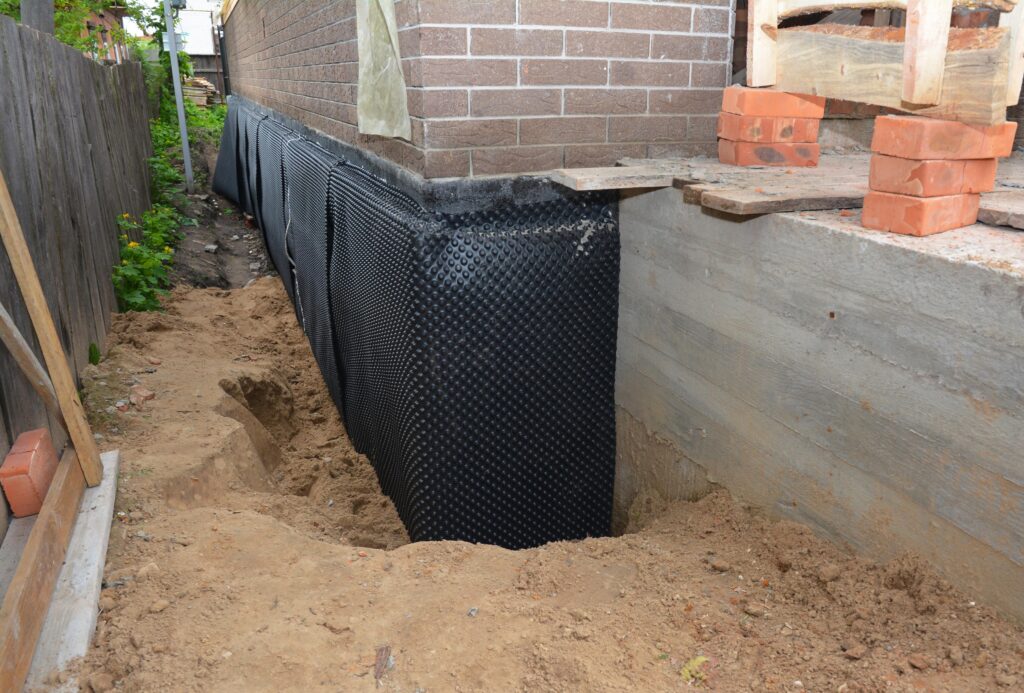
Sometimes the best way to keep a basement dry is to never let the water get near it.
- Grading: Ensure the soil around your Gallivan Blvd home slopes away from the foundation.
- Gutter Extensions: Ensure your downspouts discharge water at least 10 feet away from the house.3
Comparing Your Options
| Solution | Best For… | Longevity | Maintenance |
| French Drain | Rising groundwater & heavy seepage | 25+ Years | Low |
| Sump Pump | Preventing flooding during storms | 7–10 Years | Annual Check |
| Vapor Barrier | Dampness and musty odors | 15+ Years | Minimal |
When to Call a Professional Waterproofing Contractor
If you’re seeing any of the following, DIY “waterproof paint” won’t cut it:
- Standing water after a heavy rain.
- Peeling paint or “efflorescence” (that white powder we discussed in our chimney post).
- A musty, “old basement” smell that permeates the upstairs.
- Visible mold on baseboards or drywall.
Local Insight: Dorchester’s historic foundations (especially fieldstone) require a specialized touch. A generic contractor might use materials that trap moisture inside the stones, causing them to crumble. Always hire a waterproofing contractor who understands historic Boston masonry.
Stop the stress of the next storm.
A dry basement doesn’t just protect your furnace and water heater; it adds significant value to your Dorchester home and provides a healthier environment for your family.